Subscribe to our social channels to get the latest news about Hungary!


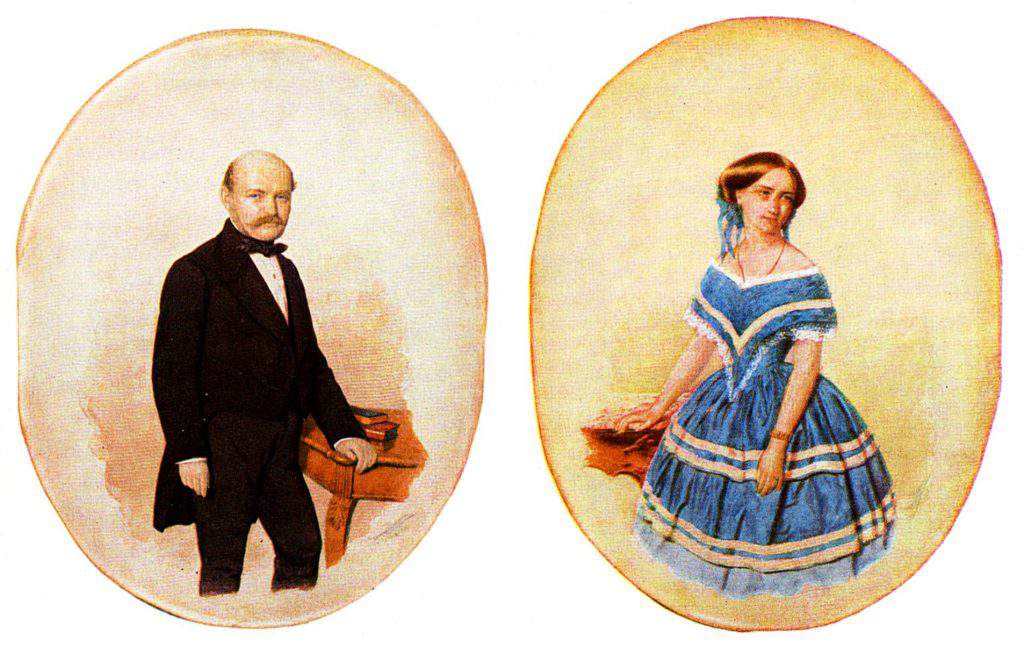
Ignaz Semmelweis was a Hungarian physician of ethnic-German ancestry, known as an early pioneer of antiseptic procedures. He was described as the “saviour of mothers” since he discovered the cause of childbed fever (or puerperal fever) and introduced antisepsis into medical practice. The saviour of mothers later suffered from nervous breakdowns, ended up in an asylum, where he was tortured, and died a terrible death.
Born on the 1st of July 1818, in Tabán, which belongs today to Budapest, Hungary, he was the fifth child in a grocer family. He started studying law in Vienna, then changed track and switched to medicine. Semmelweis received his doctoral degree in Vienna in 1844 and was appointed assistant at the obstetric clinic in Vienna.
At the time, maternity institutions were set up all over Europe to address the problem of illegitimate children’s infanticide (i.e. the intentional killing of infants). They were gratis institutions and were attractive to underprivileged women, for instance, prostitutes. In return for the free services, the women would be subjects for the training of doctors and midwifes. Two maternity clinics were operating at the Viennese hospital, the First Clinic having a mortality rate of 10% and the Second Clinic with a mortality rate of 4%. Since the First Clinic had a really bad reputation, Semmelweis often heard women begging not to be taken there, and some even preferred to give birth on the street. Semmelweis was puzzled that puerperal fever was less frequent among those born on the street. Semmelweis proceeded to investigate its cause over the strong objections of his chief, who, like other continental physicians, had reconciled himself to the idea that the disease was unpreventable.
Photo: Wikicommons by Power.corruptsSemmelweis realised that the only difference between the two divisions was that the students were taught in the First Clinic, and midwives were taught in the second, so he put forward a thesis that students might have carried something to the patients they examined during labour. One of his friends died from a wound infection during the examination of a woman who died of puerperal infection. The similarity of the two cases supported his reasoning. He drew the conclusion that students who came directly from the dissecting room to the maternity ward carried the infection from mothers who had died of the disease to healthy mothers.
He instituted a policy of using a solution of chlorinated lime (calcium hypochlorite) for washing hands between autopsy work and the examination of patients.
The result was that the mortality rate in the First Clinic dropped 90%, and was then comparable to that in the Second Clinic. The mortality rate in April 1847 was 18.3%. After hand washing was instituted in mid-May, the rates in June were 2.2%, July 1.2%, August 1.9% and, for the first time since the introduction of anatomical orientation, the death rate was zero in two months in the year following the discovery.