Subscribe to our social channels to get the latest news about Hungary!


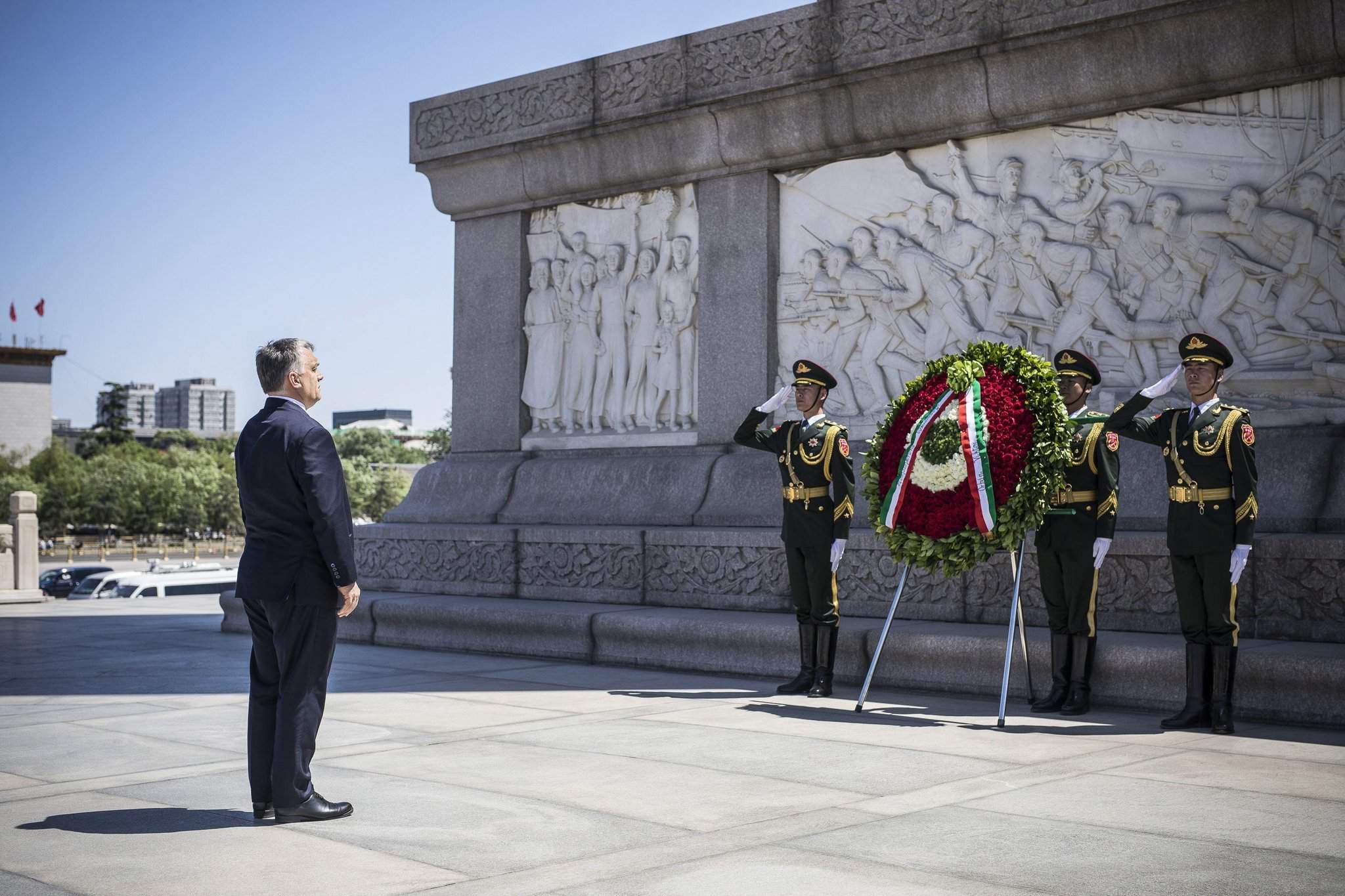
Beijing, May 15 (MTI) – The “old model” of globalisation has reached its end, and the East has caught up with the West, Prime Minister Viktor Orbán told public media on Monday.
Moreover, a prominent part of the world is fed up with developed countries giving lectures on such things as human rights and the market economy, Orbán said during an official visit.
The idea that money, profit and technological knowledge derives from the West is past its prime, he said, adding that this state of affairs had changed over the past few decades. The driving force of the economy is not found in the West but in the East, he said.
“In truth, it is in Asia today that the largest amount of money is being accumulated, and this money will start making its way to the West,” Orbán said.
He said evidence of this could also be seen in Hungary with a recent surge in Chinese investments after Chinese acquisitions of Western companies. “This trend is the exact opposite of what we’re used to and what we had been taught about the workings of the global economy,” Orbán said.
The prime minister said that globalisation had divided the world into those few developed countries that give lectures about human rights, democracy, development and the market economy, and those on the receiving end. Referring to the One Belt, One Road policy, he added that China had started “a movement in a different direction” which built on mutual acceptance rather than a teacher-student relationship.
“Everyone has the right to his own social arrangements and culture,” Orbán said.
He said the economic side of the One Belt, One Road forum had dealt mainly with shipping terms, the construction of railway and road networks, bridges and airports along the old Silk Road.
On the subject of his bilateral talks in Beijing, Orbán said he had held talks with China’s president, prime minister, parliamentary speaker along with Chinese investors, and noted that the two countries had signed several economic and financial agreements. He singled out the agreement on the revamp of the Budapest-Belgrade railway line as the “most spectacular” one, noting that public procurement tenders would soon be invited for the project and construction work could soon begin.