Subscribe to our social channels to get the latest news about Hungary!


The 1st of May marks Labour Day in Hungary, which looks back on a long history. As times changed, the way of celebration also changed. The onetime glorious processions turned into joyful summerings, which come with the tradition of maypole mounting. Let’s take a look at what we celebrate this day 🙂
According to multkor.hu, the 1st of May was first celebrated in 1890. It was the international celebration of workers for one century, and it is the solidarity day of workers since 1990.
The history of Labour Day goes back to the times of the industrial revolution. Countries all over the world started demanding the reduction of working hours from 10-16 to 8. The first protests started in Great Britain in 1817, then came Australia in 1856. In the second part of the 19th century, the USA also joined the initiation, but the American happenings imbruted and took toll on dozens of human lives.
This led to a wave of indignation all over the world, which was followed by demonstrations of commemoration. In 1889, the Second International decided that trade unions and other labour organisations should organise a process for the introduction of the eight-hour workday, and to express the solidarity. A 1st of May mass demonstration was held for the first time in Hungary in 1890.
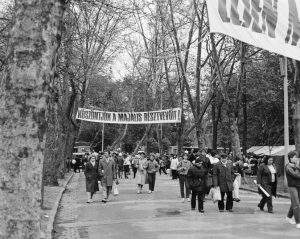
The 1st of May became the biggest international labour celebration in the 20th century, especially in the Soviet Union and the socialist countries, where it was celebrated amid glorious externals. It became an official public holiday and a labour-free day. However, after the fall of communist regimes, the 1st of May became the solidarity day of workers. Since then, it is mostly celebrated with summering/maying (majális in Hungarian).
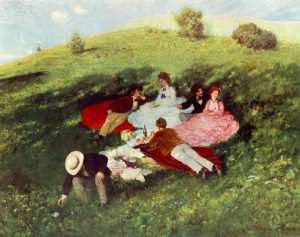
Picnic in May painting by Pál Szinyei Merse – Photo: www.mek.oszk.hu
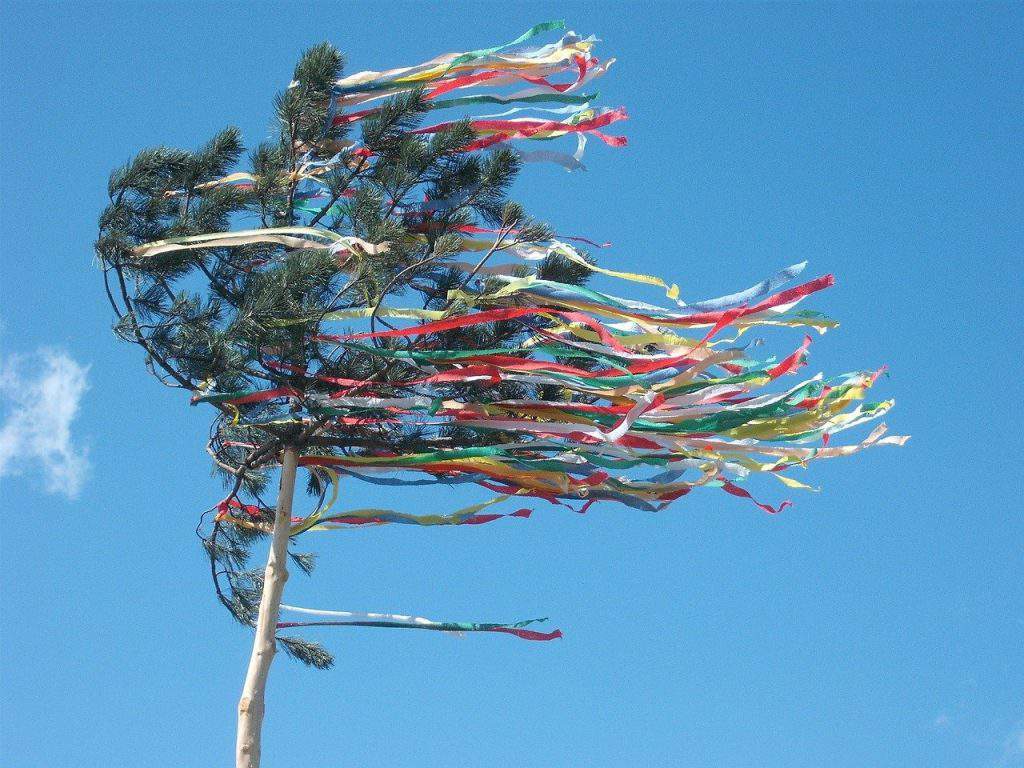
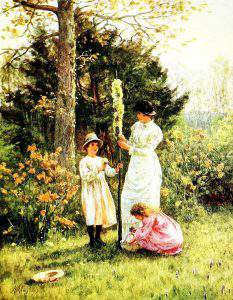
Being the honoured day of spring festivities, the tradition of summering and maypole mounting is closely connected to the 1st of May. The last day of April and the first day of May is not only important because of summering and graduations, but the traditions of maypole mounting and may-basket giving still play a significant role in the celebrations.
According to sulihalo.hu, this is the time when boys bring poles or baskets to their chosen ladies, thus implying their intention of courting. The maypole and the green branch is the symbol of nature’s revival, it is also the proof of courting intention and a gift of love. Due to the historical connections of the May-Pentecost festivities, besides the magical-practical beliefs connected to the cyclic changes of nature, the tradition also reflects the calendar’s religious momenta.