Subscribe to our social channels to get the latest news about Hungary!


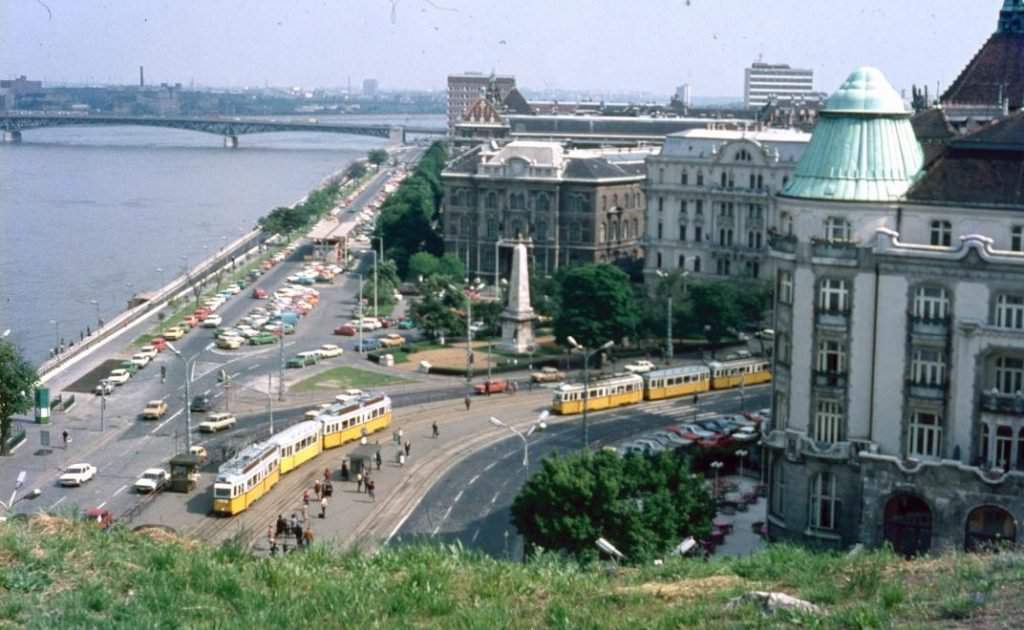
According to funzine.hu, there were times when trams were kept count of as extremely modern means of transportation, and a very long time ago carts pulled by horses were the coolest vehicles in Budapest. The country was enriched by more and more tramlines until WWII, while more and more tram rails were removed from the 1970s. But which were these lines and why did they have to go?
The first horse tram started circulating in the city in the July of 1866 between Váci Road and Kálvin Square (Széna Square back then). The first electric tram was put into operation at the time of the Grand Boulevard’s construction in the November of 1887, between Nyugati railway station and Király Street. Even though this more modern tram appeared not long after the horse trams, those only stopped working in 1898 (to be more precise, some of them carried on circulating on the Margaret Island until 1928).
You might think that the first trams were quick, but they weren’t at all. They could only go with 10 km/h in inner districts and 20 km/h in outer, less frequented districts.
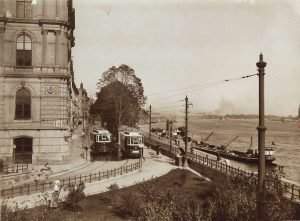
In fact, at the end of the 19th century and the beginning of the 20th century, drivers were regulated much more strictly: they had to give account of their days off, concerning where they were going to be, so that, if they were needed, they could be called in immidiately.
Budapest, in the net of trams
Budapest dwellers loved trams, even horse trams, this is why the city got 15 horse tramlines in 1855. Until the change of regime trams circulated in a lot of places where nothing reminds us of this anymore.
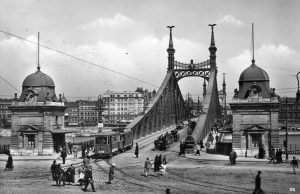
Then…

…and now
For instance, in Kálvin Square, which was called Flayer in common language, because several tramlines crossed each other there. The lines coming from Fővám Square didn’t stop at Deák Square, but kept on going on Bajcsy Zsilinszky Road as far as Nyugati railway station. A tram also circulated in Kecskeméti Street, which had its final stop at the Cemetery of Fiumei Road. In fact, this was the first line similar to today’s trams concerning the 1435 millimetre track gauge. It was first launched from Egyetem Square in 1889.
Other trams circulated from Deák Ferenc Square to Szent István Boulevard in streets so narrow that we couldn’t even imagine today. The yellow trams touched upon Erzsébet Square, Október 6. Street and Szabadság Square, while reaching Szent István Boulevard from Deák Square.