Sponsored content
There are times when we put enormous efforts to prepare a good email marketing campaign but still cannot judge the reason for its failure.
When I was an amateur in email marketing, I believed a great deal was enough to increase sales. I devoted 75% of my time in creating good content and appealing designs for the email and the remaining time was focused on getting leads and estimating the profits I might earn.
To my surprise, the majority of my emails did not even reach the prospects then how could I expect them to make a deal with me!

For the first few months, I kept on sending emails, assuming they were being received but probably the content or the deal was not good enough. I did A/B testing for the content, the design but all in vain.
Talking to experienced marketers I realised I had been completely ignorant towards “Email bounce” a crucial factor to decide the success/failure of email campaigns.
Email bounce signifies the non-deliverability of an email for several reasons. It is notified by an automatic message of delivery failure that originates from the recipient’s mail server. The bounce message provides important information to identify the reason for delivery failure, like
- Reason for the bounce
- Date & time of bounce
- The mail server that bounced it
- The RFC code, according to which hard bounces are depicted by 5XX code and soft bounces are depicted by 4XX
Types of Email Bounce – Soft, Hard & General bounce
Soft bounce indicates that the email address was valid and reached the recipient’s inbox, but bounced due to one of the following reason-
- Mailbox was full
- The message was too large for the recipient’s inbox
- The server was down
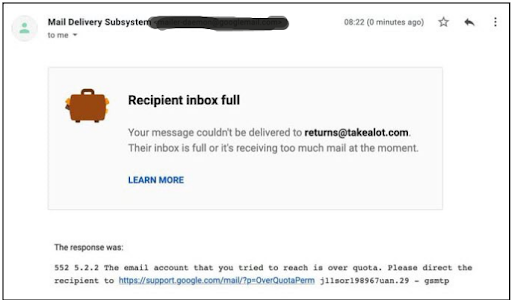
It’s better to retain such email addresses in your list as the soft bounce is due to temporary reasons. But if your messages are consistently bouncing you might want to reconsider.
Mailbox providers, such as Gmail, monitor the bounced messages after which they return undelivered emails back to the email service provider. A high bounce rate calls for an immediate hygiene process to be undertaken before starting or resuming any email marketing campaign. By hygiene process I mean, using an email verifier to check the validity of email addresses to ensure their existence and validity.
Hard Bounce shows a permanent rejection which generally occurs when-
- Email address doesn’t exist
- The email address is invalid
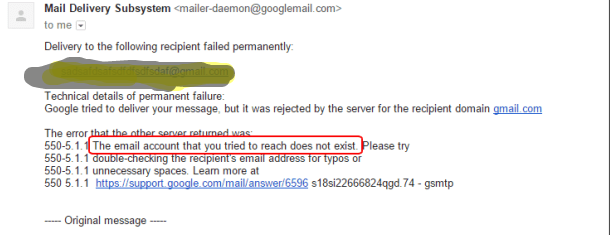
Such email addresses should never be on your email marketing list.
With the help of an email tester, the email addresses tend to bounce permanently, can be easily tracked and hence avoided.
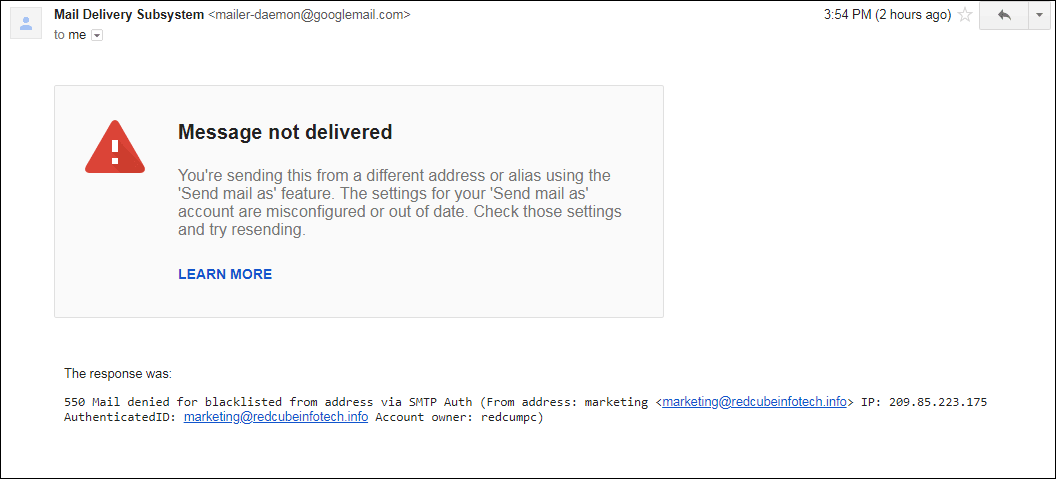
General Bounce occurs when a prospect/ recipient doesn’t receive the email because of the technical limitations of the server. Receiver’s firewall settings may restrict your emails in some cases. This type of email bounce is safe and doesn’t affect your email account and sender reputation.
Prime steps to reduce your bounce rate
- Authentication– Email account authentication is vital to maintain sender reputation which directly helps in lowering the email bounce rate. The authentication is of 3 kinds
- SPF (Sender Policy Framework)
- DKIM (Domain Keys Identified Mail)
- DMARC (Domain-Based Message Authentication Reporting and Conformance)
Once authenticated, the receiver’s server easily verifies and establishes the genuineness of your email account. Once that’s done all your future emails get a clean chit which ultimately reduces your email bounce rate.
- Segmentation– Personalized emails have shown 2X better results than generic emails. Understand your prospect better, do some broad research on the field of work, current position, the geographical location, timezone, preferred language. If you know these basics it will be easier to set up a tone to the introduction email as the first impression matters a lot.
It will ensure your emails land in the recipient’s inbox ultimately improving the campaign performance.
- Use double-opt-In – Sending a confirmation email when a user subscribes to your email list, validates the identity of the user, thus establishing the genuineness. In addition, you can ensure that the user is interested in receiving your email messages.
- Work on a good template– The first impression for the potential customer is your email template so don’t be pushy. A bad impression in the first email can force the user to mark you as spam and you will lose a prospect forever.
Use a creative email template that presents your brand image in a very proficient way. Content also plays a major role so the choice of words can either create a good impact or indicate your email as spam. Avoid using keywords like “free” or “best price” to grab attention as spam filters won’t let them enter the inbox.
- Validate your data– Opt-in database or permission-based database reduces the bounce rates for sure, but maximum 2-3% is what can be avoided with this practice.
What about the email addresses that decay over a period of time due to reasons that are not under our control like servers blocking the promotional emails, the user changes the job or has just stopped using the email id, etc.
This calls for regular verification of the complete email address database. A good email verification tool like Clearout helps you to identify and remove the invalid, spam and junk email ids from your data leaving you with valid and active email addresses.
- Improve your sender reputation– Analyze your campaign reports in detail to monitor the bounce rate. A high bounce rate directly affects the sender reputation. Hard bounces can expose you to risks like spam complaints and domain blacklisting by ESPs (Email Service Provider). Once a domain is blacklisted consider all your past efforts down the drain too.
Pay attention to user behaviour, for instance, it’s better to remove recipients who have not responded or engaged with your emails even after multiple follow-ups. Disturbing a non-interested user is forcing him to mark you as spam.
Although bringing the bounce rate to zero sounds imaginary, putting continuous efforts to keep it under control is always achievable. Following the basics mentioned above is the prime step towards higher delivery and better responses.
Don’t lose hope in email marketing based on the results of your initial campaigns. First ensure you are doing it correctly, speak to people with experience (like I did) make changes, compare the results and then take a step because this channel holds the ability to grow your ROI by 4400%!
About the Author
Bharti Jain is a content writer at Clearout. Earlier involved in the finance field, now she has completely switched towards content writing and content marketing. Together with writing articles, she is interested in creating Vlogs and demo videos and designing social media content. Technical and entertainment are her fields of interest.


